Thursday, February 25, 2010

Finding New Church Models

If you're involved in ministry, particularly in mainline denominations, you should read this article. As a non-denominational, evangelical guy, I'm beginning to see the writing on the wall that was etched onto the edifices of the mainline churches fifty years ago. The reality is that our current models of Church are unsustainable. Large, professional staffs with massive administrative and bureaucratic support will become an unbearable burden to congregations.

Thanks to the rising general level of education and now the wide dissemination of knowledge over the internet, the average person is becoming more and more free to live without the guidance of social and professional ‘betters’. For the very large majority of people around the world, that kind of empowering freedom is what progress is all about.

People don't look to the pastor as the expert anymore. They know just as much, and often times much, much more, than the church leaders about any given subject. A seminary degree, while important, doesn't carry the same weight as it used to. You can't just preach anymore, you have to dialogue. You can't come down from the mountain like Moses and dictate your vision to the masses. The masses are people, and they each have their own ideas about how things ought to go. You have to listen and ask questions and seek input. When the boomers are gone, they'll take the top-down, expert-led model of church leadership with them. The chickens of the Reformation are coming home to roost. I just hope they still come to church.

Tuesday, February 23, 2010

The Gospel 2.0

In my last post, I claimed that, for Jesus and other faithful Jews of his day, the gospel could be summed up in the simple phrase YHWH is King. I called this Gospel 1.0. But it's only version 1.0 because Jesus came and, through his life, death, resurrection and ascension, provided a subtle but crucial nuance to the gospel.

When Jesus came preaching through Galilee he announced, over and over again, that the kingdom of God was now upon Israel. In fact, Luke records his first public teaching as the reading of a kingdom-passage from Isaiah. After reading this passage, Jesus sat down and simply said, "Today this Scripture is fulfilled in your hearing." In other words, Jesus was saying that the kingdom of God was breaking upon you through me. YHWH is becoming King (truly, fully, and over against all the other gods of all the other nations that had oppressed Israel) in and through the life and ministry of Jesus. (This is a summary of what N.T. Wright writes in, among other places, The Challenge of Jesus.)

So Jesus is essentially walking around ancient Israel saying, believe the gospel that YHWH is King, and watch it happen through me. The funny thing is that Jesus was probably not the first to say this (there were plenty of other would-be Messiahs in his day). But Jesus is the only one who could back it up, not by defeating Rome, but by defeating sickness, demonic powers, and in several instances even death itself.

Ultimately, of course, Jesus defeated his own death. His resurrection was the decisive victory over Israel's (and all of humanity's) true enemy--Satan, ruling through sin and death. His ascension was not so much spiritual space travel as it was the act of the true cosmic king taking his rightful place on the singular throne over all creation. As Paul writes in 1 Corinthians, the Father put everything under the authority of the Son. In other words, Jesus is King.

This is the Gospel 2.0--the good news as Christians understand it. Jesus is King (or, if you prefer, Lord). Because of the obedience of the Son, the Father placed him on the throne and put him over all things (except for himself, of course). The kingdom of God, then, is ruled and mediated by Jesus. It is his kingdom. YHwH is King because of what his son did; and because the Son did what he did, the Father made him king. That's the Gospel 2.0--Jesus is King.

Monday, February 22, 2010

The Gospel 1.0

On Thursday I was hanging out with a friend and he asked me, "What is the gospel?" He had gotten into some conversations that had confused him on the basics of our faith. I understand. I've been there. As I've been reflecting on that and some other confusing conversations of my own, I started thinking about the gospel, what it is now, and where the whole concept came from. This is going to be the first of two posts: The second post will be on what the gospel is, and this post will discuss what the gospel was.

What I mean by "what the gospel was" is simply what Jesus (and other Torah-observant Jews of his time) thought of when he said the word gospel. Mark records the opening lines of Jesus' ministry: The time is fulfilled and the kingdom of God is near. Repent and believe the gospel! So what did he mean by this?

He couldn't have meant, of course, that I have died for your sins and risen again on the third day because he hadn't done that yet. So there must have been a gospel before the gospel--a gospel 1.0. And in order to find that, we must turn to the pages of Jesus' scriptures, the Old Testament.

Perhaps the best place to start is in Isaiah, and as instructive a passage as any comes from chapter 52.
How beautiful on the mountains
are the feet of those who bring good news,
who proclaim peace,
who bring good tidings,
who proclaim salvation,
who say to Zion,
"Your God reigns!"
So what is the good news? It's not the peace or the salvation--those are what flow out of the reality that lies behind the good news. The good news is simply that the God of Zion, YHWH, reigns. (Of course, I'm skipping over A LOT of stuff. But since this is a blog and not a dissertation, I'll allow it. If you want to read more on this, I highly recommend N.T. Wright's The New Testament and the People of God and Jesus and the Victory of God.) In other words, the gospel as Jesus understood it at the beginning of his ministry, was YHWH is King.

That's what he meant when he walked around Israel declaring that the kingdom of God had come upon the nation. He meant that YHWH is now decisively taking his rightful place as King of all Creation. How he was doing that, and what it all meant, and what were the implications of it all is another blog (or book) for another day. But that he was doing it was apparent to Jesus. YHWH is King. That's the Gospel 1.0.

Friday, February 19, 2010

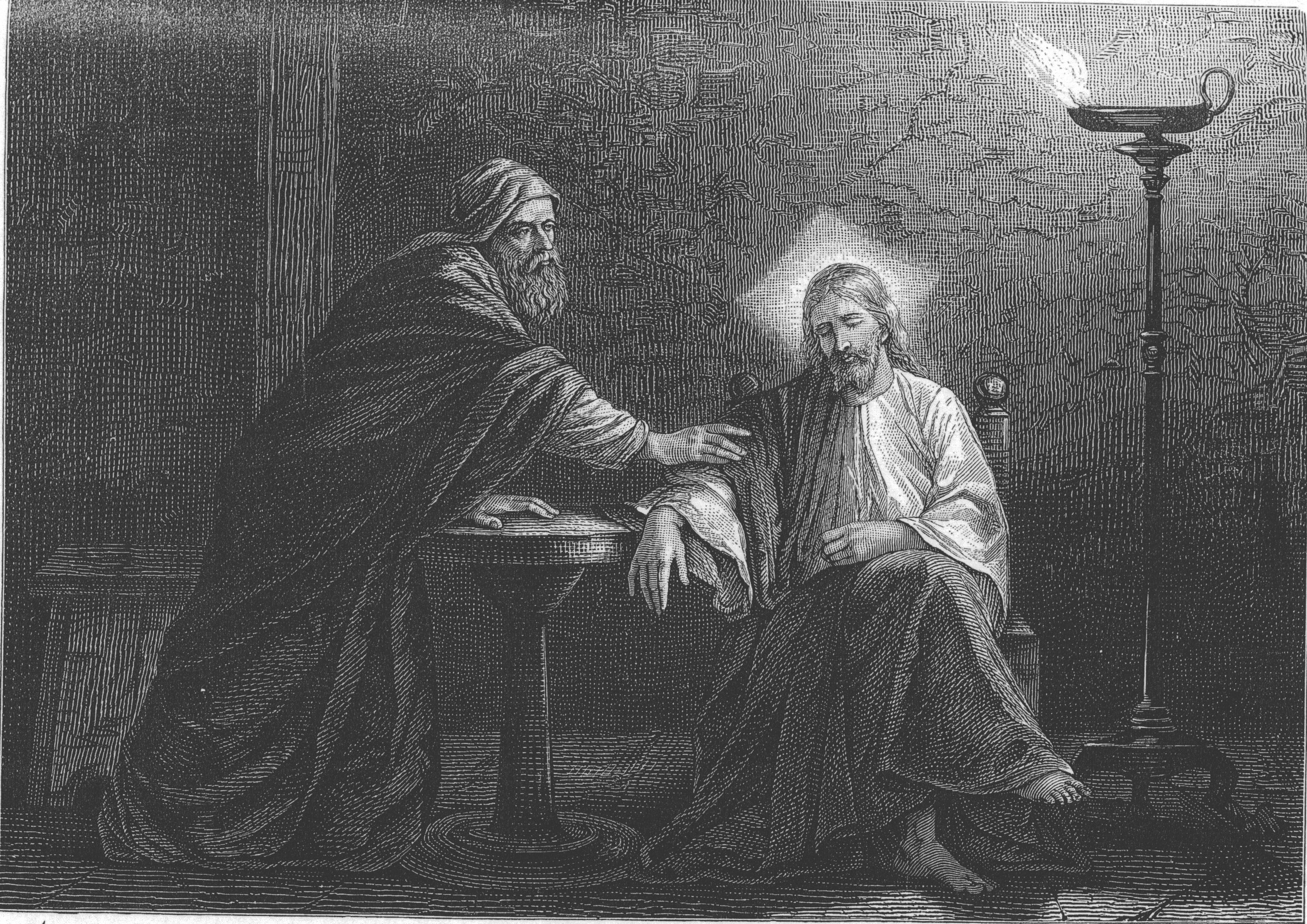
Nicodemus


My Ash Wednesday sermon this year was on the life of Nicodemus. He was the Pharisee who came to Jesus at night in John 3. We can trace his story through John's gospel from inquiry, to defense, to silence, and finally to the bittersweet way he outs himself as a follower of Jesus.

After Jesus was crucified (it seems likely that Nicodemus was present at the events leading up to the crucifixion, and yet he did not speak up on his behalf), Nicodemus took 75 pounds of myrrh and aloe and buried him. That 75 pounds was the precise amount prescribed in the burial of kings! So Nicodemus is making a public declaration that Jesus truly was a king.

What a way to out yourself as a disciple of Christ! But Nicodemus only confessed Jesus as King after months of keeping his mouth shut in order to protect his reputation. For too long he loved his place in this world so much that he wouldn't speak up about Jesus, because to do so could cost him everything.

The challenge for us is to consider what keeps us silent about Jesus. Is it your desire for a good reputation? to keep your place in life? to maintain peace in your family? Whatever it is, I hope you'll lay it down, at least for this season of Lent. Rather than thinking about what might be lost if you open your mouth, consider what could be gained by telling others about Jesus.

Thursday, February 18, 2010

Is This Worship?

In keeping with the Over the Rhine theme, watch this and ask yourself, is this a worship song? Or does the f*** word rule it out as worship?


What do you think? Is this worship? Could you worship to this song?