Showing posts with label preaching. Show all posts

Tuesday, December 27, 2011

New Sermon Series

Okay, I'm really excited about this one! We're starting a new sermon series at Ember this Sunday on the book of Mark. It's called The Gospel (According to Mark). I know, I know. I'm so creative! But seriously, I'm stoked about preaching through Mark.


This series will take us all the way through Easter, which is April 8. I'm expecting God to show up in powerful ways in our community as we explore the Gospel through Mark's eyes. In fact, Mark's Gospel is probably Peter's Gospel. Many scholars believe that Mark wrote down the memoirs of Peter and turned them into the very first Gospel to be published.

We'll also be celebrating the new series, and the New Year, by having baptisms. If you have not yet been baptized, it's an important step to take as you follow Jesus. As we'll see on Sunday night, even Jesus was baptized! We are baptized as an act of obedience and as a public declaration that we belong to Christ. Baptism is the symbol of our identification with the death and resurrection of Jesus Christ.

We would love to baptize you at Ember this weekend. For more information, please send me an email. I'd love to talk with you about baptism!

Tuesday, August 2, 2011

Sermon Prep

One of the things that I learned in seminary is that every preacher's sermon preparation process is different. Mark Driscoll recently shared that he spends about an hour of prep, and then preaches for an hour as he externally processes the text. That's great for Mark, who has a photographic memory, but it sure ain't gonna work for me. I don't have a photographic memory and I'm not an external processor, so my sermon preparation takes a lot longer than one hour.

The first thing that I do is prayerfully choose a text. Because Ember is going through books of the Bible, I'll generally read the whole book through at least once. (I read Jeremiah once the whole way through, but for a book like Titus, which is going to be our second series, I'll read it through several times.) Once I become familiar with the whole book, I'll break it up into sections. I've had to be choosy with Jeremiah, so I picked those sections which I felt were, a) most preacheable, and b) presented a holistic picture of the book.

The first page of my notes on Jeremiah 1
Once I've picked a text, I print it out in a format that I can mark up and take notes on. As you can see from the pictures, I take a lot of notes. I'll write down everything I think of, from the antecedents of important pronouns to insights that I glean from the text. This is probably the most important step of the process, as I am hoping to fully immerse myself in the Scripture I'll be preaching. I want to know it inside and out. I want to hear the voice of the author. I want to feel the heat of the sun under which he first penned or spoke these words. I want to feel the heart of God as he reveals his word through that author. I want to know the author's world, and the first audience's world, so that I can know how this text makes sense in my world.
The second page of my notes on Jeremiah 1
I let Fee & Stuart's core principle drive me as I study the text: The Bible cannot mean what it never meant. I want to understand how it was God's word to those original readers so that I can know how it is God's word for me and my congregation. This is the process of exegesis, which basically means that the preaching is trying to draw the original meaning out of the text, rather than to put his own meaning into the text.

After studying I go through what I call The 7 Good Questions, which, apparently, I've never posted here at the blog. This is a fuller process of exegesis of which the above is the answer to just one of the seven good questions. The seven questions are:
  1. What am I reading?
  2. What do I see?
  3. What is the literary context?
  4. What is the historical context?
  5. What is the biblical context?
  6. What is the principle?
  7. How do I apply this?
After answering those questions, I move on to what I call Sermon Notes, where I put together a structure and flow, come up with a title and a big idea, pull out the key verses, and write a brief synopsis. Then! Finally! I begin writing the sermon after, once again, inviting the Holy Spirit to fill me, to speak to me, and to speak through me. I'll generally go through two or three revisions of the sermon before I feel good about it. The last step is to preach it, either to my wife or to a wall, and then make any final changes. It's a long process, but it's a lot of fun for me, and well worth the time.

Monday, August 1, 2011

First Sermon Series

One of the things that I hope will become distinctive about Ember is our preaching style and philosophy. I think it's important for us to preach biblically and exegetically, which means that we'll spend a lot of time working our way through whole books, or major sections, of Scripture. We won't be doing a lot of topical preaching, though that may be necessary occasionally.

Our first sermon series is going to be a 12 week journey through the book of Jeremiah. The series is called Run With Horses, which is the name of an excellent book by Eugene Peterson, as well as a powerful metaphor taken from Jeremiah 12:5. It was that verse and that concept that set me on the course of planting this church almost a year ago.


I've finished the first three sermons and am working on the fourth one today. Writing these sermons has been such a joy, even if they are all taken from texts in the second most depressing book in the Bible! I believe that God has drawn me to Jeremiah because he wants to wage war against the idols of our hearts, and idolatry is the primary concern of Jeremiah the prophet. The insights that I've gleaned so far have been extremely challenging, and I can't wait to preach them to you.

God wants to wage war against the idols of your heart. Come join us for our Jeremiah series, and get on the winning side of that war. The first service is August 14 @ 5pm, 401 E. Schrock Rd.

Thursday, May 19, 2011

Divine Habitation Follows Divine Interruption

Sermon writing can be a funny thing. Well, maybe not funny...but interesting. Well, maybe not for you, but for nerds like me. I've been working on one particular sermon for a while now, and I just can't seem to get it right. Maybe it's because I'm not scheduled to preach it for a few months and I like to tinker if I have time. That, and I can be a perfectionist about certain things.

A typical sermon of mine is about 8 pages. I've written nearly 30 for this one. Obviously, there's a lot that has to go. This is why the Good Lord invented blogging! So here's a bit from a sermon on Jeremiah 1 that you will never hear me preach.

•••••
4 The word of the Lord came to me, saying,

5 "Before I formed you in the womb I knew you,

before you were born I set you apart;

I appointed you as a prophet to the nations."

6 "Alas, Sovereign Lord," I said, "I do not know how to speak; I am too young."

7 But the Lord said to me, "Do not say, 'I am too young.' You must go to everyone I send you to and say whatever I command you.8 Do not be afraid of them, for I am with you and will rescue you," declares the Lord.

9 Then the Lord reached out his hand and touched my mouth and said to me, "I have put my words in your mouth.10 See, today I appoint you over nations and kingdoms to uproot and tear down, to destroy and overthrow, to build and to plant."
This is Jeremiah’s divine interruption. He’s minding his own business, quietly going about his priestly duties in the comfortable suburb of Anathoth, when all of a sudden God shows up and ruins everything.

Jeremiah wanted out of this. His was not a welcome divine interruption. Jeremiah didn’t think he was cut out to be a prophet. He was afraid. So he gave God two excuses: “I do not know how to speak. I am too young.” In other words, “I don’t have the skill, and I don’t have the experience.”

When God comes to us with a job offer, we, like Jeremiah, try to reason with him that we possess neither the skill nor the experience for the task. “A prophet has to speak,” Jeremiah reasons, “but I don’t know how. A prophet has to have a certain gravitas and wisdom that can only come with age. I’m just a kid. So you see, Almighty God, Creator of the universe who stands outside of time and sees the end from the beginning, you must be mistaken. I’m not the right guy for the job.”

I don’t know if you’ve ever tried to reason with God, but it generally doesn’t go well for us. I imagine God standing there, listening patiently, and then responding, “Oh, okay. Did I mention that whole, ‘Before I knit you together in your mother’s womb, thing’? Oh yeah, that’s right, I did.”

Our excuses never hold water with God, because he knows that behind your excuse is fear. Jeremiah was afraid; it’s as simple as that. Jeremiah’s fear, like our fear, was borne out of his frailty. He could not speak, and God was calling him to a speaking ministry, to be a prophet to the nations.

Many of you have seen The King’s Speech, the story of King George VI. He had a major speech impediment at a time when, due to the advent of radio, public speaking became a necessary task for England’s royals. He was the second son of King George V, and as the second son, the odds were against him ever becoming king. This relieved him, because his speech impediment, his frailty, made him very afraid of ever becoming king.

But his worst fears were realized when his father died and his older brother abdicated the throne to marry a divorced American woman. On top of this, Hitler, who was a renowned and captivating orator, was on the march on the Continent, and a second great war seemed inevitable. Such were the circumstances under which the stammering Duke of York became King George VI.

As with Jeremiah and King George VI, God calls us to tasks that take us into the heart of our frailty. The stammering king stands up to the loquacious Fuhrer; the unskilled and inexperienced prophet takes on his own people, calling them to repent of their idolatry. And you, called by God to a task that demands what you do not have within you to deliver. But God says, “Do not be afraid of them, for I am with you and will rescue you.”

Jeremiah’s divine interruption came with two divine promises: 1) I am with you. 2) I will rescue you. God’s presence and strength will overcome Jeremiah’s lack of skill and experience because God is with those he calls. Divine habitation follows divine interruption.

Your divine interruption has come with two divine promises: 1) God is with you. 2) God will rescue you. God’s presence and strength will overcome your lack of skill and experience because God is with those he calls. Divine habitation follows divine interruption, for Jeremiah, and for you. God is with you, and God will rescue you.

Wednesday, August 18, 2010

Preaching Essentials: The Spirit

Nothing is more important to the preacher, or to any Christian, than the Holy Spirit. He is "God with us". The Spirit empowers us to live godly lives full of love, joy, peace, patience, kindness, goodness, faithfulness, gentleness and self-control. The Spirit sets us free from our slavery to sin. He reminds us of the words of Jesus, and helps us to walk humbly and obediently with the Triune God.

For preachers, the Spirit empowers us when we study and when we preach. He is with us through the whole process of sermon preparation. Some people have this understanding of the Spirit that he doesn't show up until church starts. That's ridiculous. He is with us, always. And he wants to be included in everything we do, especially when it relates to God's word.

Do you pray when you sit down to study the Scriptures? Do you invite the Spirit to guide you as you do you exegesis? Do you ask him to lead you as you let ideas ruminate in your mind, or write them down on paper, or type them into the computer? Do you surrender your words, and your agenda, to the Spirit of God, praying that you would have the strength to take up his words and his agenda?

There have been times when I've done a lot of work on a sermon, even typed several pages of it, but then I got a sense that it wasn't right. It wasn't what the Spirit wanted to communicate to the church. There have even been times when I've tossed the whole sermon out as I was walking up to the pulpit. That's always interesting. While that sort of thing is fine to do from time to time, I don't want to live in that place. I want to make sure I'm actively and intentionally inviting the Holy Spirit into the sermon process from the very beginning. Preaching without the presence and power of the Holy Spirit is nothing more than public communication.

Monday, August 16, 2010

Preaching Essentials: Exegesis

Exegesis is another one of those big, fancy words that seminary types (like me!) like to throw around to make themselves sound smart. It literally means “to guide out of”, and we use it to mean the process of finding the original, intended meaning of a passage of Scripture. When we exegete, we’re trying to pull the meaning out of the text, rather than reading our meaning into it.

This process is hard work, but you cannot take short cuts. This is, after all, the Word of God we’re dealing with here. You kinda want to be sure you’re getting it right. It’s truly amazing where good exegesis will take you as you prepare your sermon.

Several years ago I taught basic exegetical practices to a small group of guys, and then asked them to prepare a short sermon on their favorite Bible passage. The results were amazing! Each one of those guys delivered rock-solid Bible messages, complete with sound interpretation and meaningful, Spirit-led application. It was an eye-opening experience for me because I saw, first hand, the power of learning how to study the Bible well.

As you prepare your sermon, take your time with the text. Don’t rush the process. Invite the Spirit to be with you in your time of study. If you don’t know how to do proper exegesis, pick up one of these books:

Grasping God’s Word | Duvall & Hays
How to Read the Bible for All Its Worth | Fee & Stuart

I urge you, as a preacher of God’s Word, to let God speak through his Word. Commit yourself to treating the Bible with integrity and honor, to say what it says, and not what you want it to say or think it should say. The Bible really does cut to the heart, and it has the power to transform lives. By doing proper exegesis, you can unleash that power.

Friday, August 13, 2010

Preaching Essentials: The Bullet

It used to be that a good sermon had anywhere from three to five points, and if the sermon was especially great, those points all started with the same letter, or rhymed, or something else totally rockin’ like that. But I’m convinced that style of preaching doesn’t fly with post-modern audiences. It feels forced and artificial.

Today, the best sermons have one point. You say one thing, and say it well. You exegete the text not so that you can make a series of points, but so that you can deliver the overall meaning, and then apply that to the specific circumstances of your congregation.

One of the images that helps me as I prepare my sermons is a bullet. Bullets are streamlined, smooth, and come to a lethal point. They find a single target and take it down. The opposite of a bullet is buckshot. Buckshot spreads out all over the place and doesn’t have that laser-like focus on a single target. Preaching with buckshot is scattered, hard to follow, and overall ineffective. You want to preach with a bullet.

I know the violent language may turn some people off, but one way to think about preaching is as an assassin of the “old man”. Paul talks about crucifying, with Jesus, the person we used to be. Our old ways of living and being must die. Preaching the word of God is a kind of killing (and, hopefully, a kind of raising to new life in Christ). Thinking about your sermon as a bullet may seem morbid and violent to you, but preaching is, and should be, an act of violence against the kingdom of darkness and the ways in which we still obey that darkness. You’re not going to sweet talk anybody out of hell. You’ll need bullets. Lots of them.

Thursday, August 12, 2010

Preaching Essentials: Creativity

One of the things that evangelicals are learning to do really, really well is get creative with their preaching. Preachers are bringing massive props, and even live animals, on stage to help drive home the point of their message. I even heard of a pastor who tried to get a tank (army style) on stage one Sunday. No word yet on whether or not the baptismal was blown to smithereens.

The use of video has grown immensely, as well. Playing video clips from popular films used to be cutting edge, but now preachers are developing their own film houses, a la Rob Bell and nooma, to communicate the gospel. Speaking as a video producer and a preacher, this is an encouraging trend, particularly given the high-quality of some of these productions.

But most preachers can't afford their own film crew, an army tank, or a petting zoo for a Sunday morning sermon. There are still ways to be creative, however. Remember, the point of creativity is memorability, and the point of memorability is transformation. Our aim, as preachers, is for God to transform those who listen to us (including ourselves). So your aim, as a preacher, should be to communicate God's word in such a way that it sticks with those who hear you.

This can take a lot of different forms. You can use powerful imagery or good design to support your message. You can try your hand at creative writing or poetry. (Hey, Jesus told parables that he probably made up on the spot! Why shouldn't you?) Think critically about the way that you make your point. The shorter, the better. And the more audacious, the more memorable. But please, whatever you do, never, ever alliterate. Alliteration is dangerous. Alliteration is devastating. Alliteration is dead.

Creativity doesn't have to cost money. The best artists (and preachers are artists) are those who pull their work together through resourcefulness and determination. They pour their souls into their work, not their (or their church's) bank account. Creativity is about remembering. Remembering is about transformation. Transformation is what Jesus is up to on this planet.

Wednesday, August 11, 2010

Preaching Essentials: Honesty

It seems silly to even have to mention it, but honesty is vital to the task of preaching. It should go without saying that truthfulness is fundamental to the proclamation of God’s truth. And yet, preachers are so often tempted to fudge the details of their illustrations, read their own thoughts into the Scripture at hand, or out and out plagiarize another pastor’s sermon.

While I’ve never thought about plagiarizing another sermon, I have been tempted to manipulate the Bible to make it say what I want it to say. My conscience has been clear thus far; that is until my last sermon. I was given the assignment of preaching on bad choices from the book of Proverbs, and the texts that I wanted to use had already been claimed in the sermon series. So I took the best of what was left (for my topic) and made up the rest. Sort of. I developed a framework for the sermon and overlaid it on the whole book of Proverbs, rather than working the other way around. In other words, I started with the sermon instead of the text. The framework, rather than the Bible, dictated where the sermon went.

Although my conscience wasn't overburdened with the sermon, and what I did probably fell into a gray area of creative license (maybe), it is still a practice I don't want to turn into a habit. While I can justify what I did (I was given the topic not a text; nothing I said was unbiblical; you could make a case that my framework is mostly derived from the text), it is a path I don’t want to walk down. True honesty is staying faithful to the text. God can speak for himself, and God’s word can speak for itself. Neither need my fancy-pants preacher’s tricks to communicate the message.

The core temptation of the preacher is to be the man or woman who delivers the message that saves the world. We tend to have overblown messiah complexes, even while we tell people about the true Messiah. This creates pressure (mostly internally, but sometimes externally as well) to write and deliver better and better sermons. This pressure can leave us looking for shortcuts, which so often means falsifying stories, playing fast and loose with the biblical text, or stealing another sermon.

But communicating God’s word demands honesty. How can you lie and preach the gospel at the same time? Haven’t you become horribly corrupt? How can God’s ends be served by your Satanic means? Deception is the native tongue of hell. Are we to communicate the glories of heaven in the diabolical language of hell? Flatly, no. Beware of the temptation to exaggerate and falsify stories. If the text doesn’t fit what you want to say, change what you want to say to fit the text. If you use another sermon or an extended quote, give credit where credit is due. God’s word is truth, and he will not abide it to be spun with lies.

Saturday, August 7, 2010

Preaching Essentials: Humility

Seeing how this is a blog by a preacher (sometimes, anyway), I thought I should occasionally talk about preaching. So this is the first in a series of posts called "Preaching Essentials". As I've studied preaching in seminary, listened to great preachers, and done a little bit of it myself, I've developed a particular philosophy of preaching. These posts will be my attempt to communicate that philosophy to those of you who are interested, which is probably a small percentage of you. Hopefully, if you are a preacher, you'll find something of value here.

Now to it.

Humility is the most important thing in the world, and therefore it is the most important thing in preaching. The preacher must be humble. There is nothing less tolerable and more awkward than an arrogant preacher. Oh, let me guess, you're the hero of this story, too? Ah, another personal illustration of how godly you are! Let me give you some practical advice: Never tell a story that makes you look good.

You need to understand that the congregation assumes, simply by the mere fact that you are preaching, that you are more mature, more spiritual, and just plain better than they are. They expect you to have wisdom they need. They anticipate that you will say something that will change their lives. They are willing to sit, in silence, and listen to you talk without interruption for up to an hour. You, preacher, are highly-esteemed and wield a power that is unparalleled by any other vocation in our soundbite, jump cut, 140-character tweet culture. If you do not come to the task with humility, therefore, it will swallow you whole.

The preacher's responsibility is to step down from the pedestal upon which he has been placed by the congregation. God, alone, can be lifted up. You cannot take his place. If you stand too tall you will block the congregation's view of the risen Christ. So how can a preacher stay humble?

Don't Take Yourself Too Seriously


Your task is important, but you are not. Don't get caught up thinking that you're going to save the world through your preaching. That's ridiculous. God's going to save the world through his Son, you just get to talk about him.

Be Self-Effacing


Make fun of yourself. Be open about your shortcomings. Tell stories about how you've gotten it wrong. Name your sin before the congregation. Too many preachers think they have to maintain some kind of image in the society of their church, but that kind of image is from the devil. The only image you need to maintain is the broken-but-being-repaired image of God you carry with you everywhere.

Praise Others


If you're going to share a personal illustration, make sure it's one where someone else in your church comes out looking good. Heap praise on other staff members. If you share a pulpit, talk up the other preachers on your team. And, most importantly, mean it.

Be Respectful of Opposing Viewpoints


Who knows, but maybe you're not nearly as right as you think you are. Don't let arrogance seep out of your soul by trashing someone else's viewpoint (or, even worse, someone else's humanity). Talk about it as though you were having a respectful dialogue with someone with whom you're trying to share Jesus.

I'm sure there are other things we could do to demonstrate humility in the pulpit. Maybe you've seen a good or bad example of this: please leave it in the comments so we can all learn. Remember, whether you're a preacher or a CEO or a college student, humility is the most important thing in the world.

Wednesday, May 12, 2010

Mythbusting

I've been invited by a group of students at Otterbein College to participate in their series Mythbusters, which, like the show of the same name, is an exploration of urban legends and old wives' tales. The myths that I'll be busting, however, are Christian ones, and my myth is the Rapture. As I've never believed in the Rapture, I'm quite excited to bust this pervasive and insidious false teaching. Below is an excerpt from my sermon where I deal with the "Rapture" passage from 1 Thessalonians.

Those who believe in the Rapture see here a clear reference to that event. “We who are still alive and remain on the earth will be caught up in the clouds to meet the Lord in the air.” What else could this possibly mean? Rapture!

But maybe it’s not so clear cut as that. This passage is first and foremost about resurrection, not rapture. Look at the very beginning of this section: “We want you to know what will happen to the believers who have died….” Paul is addressing the concerns that Christians in Thessalonica had about their fellow believers who have died. If you interpret the teachings of Jesus ultra-literally, you would think that no one who trusts in him will ever die. And yet, Christians were dying (and have been dying ever since). How could this be?

Paul’s answer is resurrection. “…When Jesus returns, God will bring back with him the believers who have died.” The resurrection of the dead goes hand in hand with the return of Christ. Resurrection, not Rapture, is the first and most important thing that happens when Jesus comes back.

But what about those believers who are still alive when Jesus comes back? Well they will meet Jesus in the air! So what does that mean?

If you’ve ever read the first chapter of the book of Acts, you know about the Ascension of Jesus. That’s when Jesus was lifted off the earth and enveloped in the clouds right in front of his disciples. And then they just stood there staring at the sky like idiots. I mean, I would too. Jesus just freaking flew into the sky!

But then some angels come along and say, “Dudes, why are you staring at the sky? Don’t worry about it. Jesus will come back, and when he does he’ll come the same way he left.” So that’s where Paul, and we today, get the idea that Jesus is going to come back from the heavens. And when he does we’re going to meet him in the air.

Sounds like the Rapture, right? But it doesn’t say that Jesus is going to come halfway then turn around. It doesn’t say that he’s going to come down and say, “Attention world, I’m back! Okay you, you, you, you and you come up here. Peace out! See you in seven years, suckers!” That’s just not here. That’s not Jesus.

But what’s even more damning for the case for the Rapture is what you discover when you learn a little bit of history. If the President of the United States were coming to your house, would you make him ring your doorbell? You probably wouldn’t say, “C’mon on in, it’s open” to the President. No, you and all your neighbors would line the street and wait for him. You would go out to meet him.

In ancient Roman culture this same sort of thing happened, but on a grander scale. When the emperor or an important dignitary came to your town, all the people of the town would go out to meet him while he was still a long way off. They would go out to meet him and then walk with him, usher him, back into their town.

Now that you’re armed with that bit of knowledge, what do you think is happening in this passage? A Rapture, or a royal welcome? This is a royal welcome for the one who comes to our home not from some distant land but from Heaven itself, the one who comes to take his rightful place as the King of kings. This passage is not about being snatched away to heaven. It’s about resurrection and showing Jesus proper respect when he returns.

Saturday, April 3, 2010

Good Friday: The Confessing Thief


This darkness is, indeed, strong, for it has sucked into its vortex of betrayal and violence this innocent man lifted up on the cross between these two thieves. They were spreaders of the darkness. They were willing participants with the darkness. But Jesus? No. He was pure light.

What is he doing on a cross? Crosses are for those who create and spread darkness. How can he be here, nailed between two thieves, two criminals? How can the darkness snuff out the light? Isn’t it supposed to work the other way around?

Maybe that’s why the mocking criminal was so cynical. If you are the King of the Jews, if you are God’s Messiah, then prove it by saving yourself. Pull the nails out of your hands and feet. Get down from that cross. Call on the angels of God to rescue you. And oh by the way, save me too. It’s all too easy to become cynical in the midst of such overwhelming darkness.

What do you expect, says the thief who makes the good confession. What do you expect when you choose to spread the darkness by breaking God’s commands? Did you think there would be no consequences? Did you think that his light would shine unhindered by all that darkness you’re throwing around? What did you think would happen when you sinned? How can you blame God for this darkness? He has not forgotten us. We have forgotten him.

Don’t you fear God? This man Jesus has done nothing wrong, and yet he’s in the same position as you and I. We deserve this cross because we have thrown darkness over the light. But he is the light! What’s happening to us is the work of justice. What’s happening to him is either a tremendous mistake or the most horrible evil that has ever been committed on the face of the earth.

We complain about the darkness that overwhelms us, but, even if in some small way, we all contribute to that darkness. We all sin. We all do wrong to each other. But Jesus? He never sinned. He never did any one any wrong. And yet the darkness consumed him. He was pure light, but still the darkness covered him as he died there, suffocating on a roman cross.

We push all of the blame onto God, as though he were some cosmic, supernatural janitor we hired to clean up all of our metaphysical messes. We complain that he has forgotten his duty of wiping our noses and cleaning up all the filth we have spread throughout the house. This darkness is his fault, we say bitterly, and what has he done about it? What, indeed?

Has God forgotten? Has he turned his back? Has he abandoned us? Does he not remember? Where have you gone, God? Where are you, God, when even your most innocent of servants succumbs to the power of the darkness and is tortured to death on a cross? Could you not even save your Chosen One? Where have you gone, O God?

I am here. Next to you, on this cross, this ancient gallows. Do you think that I have forgotten you? How can I forget you when I am being crucified right next to you? I suffer with you. I suffer for you. You bear the burden placed upon you by justice. I bear the burden placed upon me by mercy.

I have come, not to succumb to the darkness, but to subdue it, and break it, once and for all. Oh you may not understand now, but it’s only Friday. It’s only Friday, and Sunday is just a day away.

So we say, yes, be angry, but know that there is a place for your anger, and that place is here, at the cross. If you want to shout at God because of all this darkness, go ahead. But know that the one to whom you raise your voice is the one who is raised up on the cross and killed. You are not shouting into the air. You are shouting at a man, bloodied and beaten, mocked and betrayed, pierced and tortured, nailed to the Roman instrument of capital punishment. Know that your God knows, intimately, this darkness that plagues us all.

No, God has not forgotten. We commemorate tonight his very act of remembering the messes of darkness we have got ourselves into. He has remembered us.

And so the confessing thief turns to Jesus and says, “Jesus, remember me when you come into your kingdom.” Remember me. Remember me, Jesus. When you finally become king, Jesus, remember me. What an interesting thing to say to a man on a cross.

Our cry is the same as that of the poor, dying criminal. Remember me, Jesus! When darkness has surrounded me, O Jesus, remember me! Don’t forget about me. Don’t look past me. I’m still here. I’m still hanging on. When you come into your kingdom, remember me.

God has not forgotten you. We remember the cross tonight, that horrible place of death where God remembered you. He has not forgotten. He has not turned away. Jesus remembers you.

Wednesday, March 31, 2010

dia•spora Sermon: Humility

Take a listen to my sermon on humility. I preached this at our young adult service this past Sunday. You may have also noticed in the right hand column at the top is a new Sermon Player. I intend to upload as many sermons and classes of mine that I can. Check back for future updates.

Monday, March 29, 2010

The Riverbed

Last night I preached a sermon on humility at dia•spora, our service of mostly young adults and young families. Humility is one of those topics that doesn't get covered a lot, probably because most preachers and teachers deem themselves unqualified to speak authoritatively on the subject. (I mean, can you really be an expert on humility? A bit of an oxymoron, isn't it?) But I happen to believe that humility is the most important thing in the world. So, despite my shortcomings, I wanted to address it.

The Bible tells us, on several occasions, that God opposes the proud but gives grace to the humble. (Proverbs 3:34, 1 Peter 5:5) In other words, humility is the channel through which God's grace flows to us. It's the riverbed of the River of Life. The deeper the riverbed of humility the greater volume of God's grace flows into your heart.

Of course God's heart is to give us as much grace as we can bear. That's why, I believe, everything that happens to you is an opportunity to humble yourself. God has so ordered creation that it might humble the greatest of creatures--men and women. Life is humbling, and every experience is an opportunity to grow. Every difficult time is an opportunity to learn. We dig the riverbed deeper when we humble ourselves and learn the lessons that God is trying to teach us.

Whatever God is doing in your life, I assure you that part of it is trying to build humility into your soul. God wants that riverbed to be as deep as it can because his reservoir of grace is infinite. Think about the circumstances of your life--the good, the bad and the ugly. Ask God what he's trying to teach you, and specifically how he's trying to teach you humility. Dig the riverbed deeper by humbly obeying him, and enjoy the rush of grace that flows into your heart.

Friday, February 19, 2010

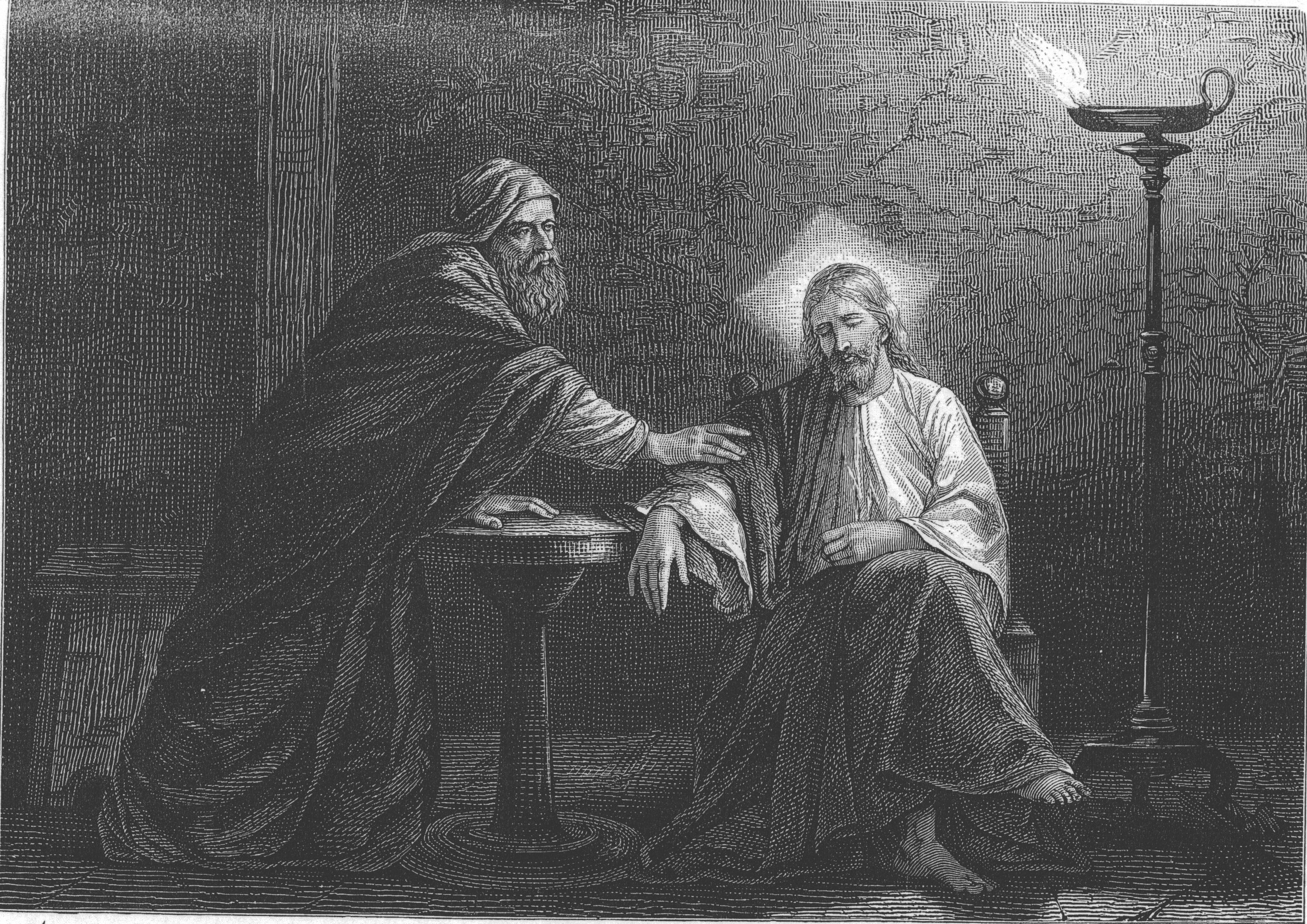
Nicodemus


My Ash Wednesday sermon this year was on the life of Nicodemus. He was the Pharisee who came to Jesus at night in John 3. We can trace his story through John's gospel from inquiry, to defense, to silence, and finally to the bittersweet way he outs himself as a follower of Jesus.

After Jesus was crucified (it seems likely that Nicodemus was present at the events leading up to the crucifixion, and yet he did not speak up on his behalf), Nicodemus took 75 pounds of myrrh and aloe and buried him. That 75 pounds was the precise amount prescribed in the burial of kings! So Nicodemus is making a public declaration that Jesus truly was a king.

What a way to out yourself as a disciple of Christ! But Nicodemus only confessed Jesus as King after months of keeping his mouth shut in order to protect his reputation. For too long he loved his place in this world so much that he wouldn't speak up about Jesus, because to do so could cost him everything.

The challenge for us is to consider what keeps us silent about Jesus. Is it your desire for a good reputation? to keep your place in life? to maintain peace in your family? Whatever it is, I hope you'll lay it down, at least for this season of Lent. Rather than thinking about what might be lost if you open your mouth, consider what could be gained by telling others about Jesus.

Sunday, November 29, 2009

They Like Jesus...

This is the sermon I preached the weekend Ezekiel was born. It's called "They Like Jesus but not the Church". With apologies to Dan Kimball...

Saturday, June 28, 2008

Sermon Manuscript: Jesus Rules

Jesus Rules

If you could believe any religion, which one would you choose? That’s kind of a stupid question, isn’t it? I mean, we’re all here at Heritage CHRISTIAN Church. Most, if not all of you, have already made your decision. You are a Christian.

But why? Why do you choose to be a Christian? It’s not exactly the most popular religion available to you. It doesn’t get good press, particularly the evangelical brand of Christianity.

If religions were nightclubs, Christianity would be where all the awkward people who can’t dance go. The cool people tend to stay away. So if you’re trying to get ahead in this world, if you’re trying to make a name for yourself, you may want to find a new place to dance.

But you know, deep inside, that there’s something different here. It may be awkward and weird at times, filled with people you wouldn’t want to be seen with, but it’s got something that no place else has, something that you would hate to leave behind.

Sometimes this thing that makes Christianity so different gets lost in the noise and clang of politics. Sometimes it’s discarded altogether and replaced with something inferior. Sometimes the very core of our belief gets trampled or trivialized. It gets glossed over. It gets forgotten. We close our eyes to it, or we roll our eyes at the sound of it. We cling to something more popular. We champion something that makes us look better. We raise the banners that play to the cameras and we turn our backs on that which makes us truly Christian.

But it’s the gospel that tells us who we are. It’s the gospel that makes us Christian. No one else has this. No one else believes it. You can’t find it anywhere else on earth but in this funny little dance hall with the awkward people that you’re embarrassed to introduce to your cool friends.

And it’s this funny little message that doesn’t make any sense on earth, but you’ve bought into it along with all the weirdos and crazies and human embarrassments. And you come to this funny little dance hall with all these people you’d never call friend but you call them brother and sister, and you dance and you sing because it’s the gospel that ties you together. It’s this funny little message that changed your big important life and now you see that it was never you who was big and important, but it was Jesus who was big and important all along. And it’s his gospel, and it’s his funny little dance hall, and it’s his people that come here to sing and to dance for his glory instead of for the cameras, and the pub, and the status, and the hollow hand-clapping of human admirers.

The gospel itself is easily mistaken for an imposter. After all, there are lots of “good newses” in the world. You’ve just won the lottery! Hey, that’s good news. I’m pregnant! That’s good news, most of the time. The Buckeyes are going back to the National Championship game! Well, I don’t know if I can handle that again.

The true gospel, the truly good news that defines Christianity, hasn’t changed since it was first preached. It’s a message that’s even older than the writing of the New Testament. It has stood the test of time. It has withstood countless attempts to change it, twist it, reshape it, repackage it, and outright deny it. It is the rock upon which men and women have broken for twenty centuries. It has offended and comforted, angered and pacified. It has been laughed at, made mockery of, and derided by kings and critics. And millions who believe it have willingly given their lives for it, refusing to deny it despite the fire, the blade, or the beasts. It is the gospel of God, and on it I take my stand, in it I find refuge, and through it I find salvation.

Listen to what Paul writes in I Corinthians 15.

1Now, brothers, I want to remind you of the gospel I preached to you, which you received and on which you have taken your stand. 2By this gospel you are saved, if you hold firmly to the word I preached to you. Otherwise, you have believed in vain.

3For what I received I passed on to you as of first importance: that Christ died for our sins according to the Scriptures, 4that he was buried, that he was raised on the third day according to the Scriptures.


This is the message that makes Christianity unique among all the religions of the world. Jesus died for our sins. He was buried. And he was raised again on the third day. That’s something that you don’t find anywhere else. Nobody else died as an atoning sacrifice for your sins. Nobody else was raised from the dead. The gospel is our message. If you believe it, you’re a Christian, no matter your background. If you don’t, you’re not, regardless of how often you go to church.

The formula that I had always heard for the gospel, and the one that is probably the most popular among evangelicals, goes something like this: Jesus died for your sins so that you can go to Heaven when you die. Or, Jesus died for your sins so that you can have a relationship with God.

Now, that’s good news, right? But is it the good news? Is that the gospel as it came to Paul? It’s not, is it? Going to Heaven and having a personal relationship with God are true and good, but they are theological addendums to the gospel. They are the result of the gospel. Those things are possible because the gospel is true.

The gospel itself is news. In other words, it’s a report of the facts of what happened to Jesus of Nazareth on the days we now call Good Friday and Easter Sunday. And it is verified by the prophecies of the Old Testament, as well as by the eyewitness accounts of more than 500 people.

Jesus died. “Oh, that’s too bad.” He was buried. “I heard that.” He rose from the dead. “Wha?!?!” Let’s look at this a little more closely, and then I want to talk about what it means. Let’s look at the scripture again.

3For what I received I passed on to you as of first importance: that Christ died for our sins according to the Scriptures, 4that he was buried, that he was raised on the third day according to the Scriptures.

First, Jesus died for our sins. I’m not sure if you’re aware of this or not, but there is a lot of evil in the world. To put it simply, evil is what God calls sin. Most of us agree that there is a lot of sin out there somewhere, but not necessarily in our own lives. But, the Bible tells us that we’re all born into sin, and we’re all sinners from day one.

This wouldn’t be a problem for us if God were just cool with sin. Unfortunately for us, he’s not. God’s not okay with sin because he has never sinned. He is perfectly good, holy, righteous, and just. And because he is who he is, he has to judge us for our sins. We must be punished, and that punishment is death, and even eternal death in hell.

There is so much more to say about this, but I want to get to the good news. Jesus stepped between us and the judgment of God. That’s what his death on the cross was all about. Because he is the Son of God, and never sinned in any way, in his death he took all of God’s punishment against all of our sins, for all of us.

The second part of the gospel is this: Jesus was buried. In other words, he really died. He wasn’t mostly dead, he was all dead. He was dead, embalmed, and buried in a tomb with a heavy stone rolled over it. He was dead.

So far the gospel is good news for us, but bad news for Jesus. Our sins are forgiven, but he’s dead. But really the last part is the best part: On the third day Jesus rose from the dead. He died, but he was too strong for death to hold him down any longer.

The resurrection of Jesus is the victory that gives all of us hope that death does not have the last laugh. In Jesus, death died, and it doesn’t haunt us anymore because we can stare it in the face and smile, knowing that as Jesus rose again, we too will rise again.

This is the gospel. Jesus Christ died for our sins. Jesus Christ was buried. Jesus Christ rose from the dead on the third day. Receive this. Believe this. Take your stand on this. Be saved by this.

But what does it all mean? What has changed in the world because Jesus died for our sins and rose again? How does the gospel change everything for everyone? Most importantly, what do these facts tell us about Jesus? If the gospel is the story of what happened to Jesus on Good Friday and Easter Sunday, then what does that story tell us about Jesus?

I think the gospel tells us three things about Jesus. I’m certain that there are more, but for our purposes, I want to look at the following three things: 1. Jesus rules. 2. Jesus rules. 3. Jesus rules. It sounds complicated, I know, but let’s just start with the point about how Jesus rules. Flip back a book to Romans 9, and we’ll look at verses 1-5.

1I speak the truth in Christ—I am not lying, my conscience confirms it in the Holy Spirit— 2I have great sorrow and unceasing anguish in my heart. 3For I could wish that I myself were cursed and cut off from Christ for the sake of my brothers, those of my own race, 4the people of Israel. Theirs is the adoption as sons; theirs the divine glory, the covenants, the receiving of the law, the temple worship and the promises. 5Theirs are the patriarchs, and from them is traced the human ancestry of Christ, who is God over all, forever praised! Amen.

Jesus is God over all. Did you see how Paul just kind of slipped that in there? He was going on and on about Israel, then he mentions the name of Christ, and, oh yeah, he is God over all, forever praised! It doesn’t get any bigger than that.

Jesus rules. He is God over all. He is forever praised. He is the King of creation. No power can prevail against him. No plan can prosper against him. His reign is universal. There is nowhere you can go where Jesus is not king. Now there are plenty of places you can go where he is not recognized as king, but there is nowhere that he does not reign as God over all, right now.

Are you allowing Jesus to rule in every area of your life? Have you handed everything over to him, or are there things that you’re holding back? Is there anything that you’re unwilling to let Jesus change about you?

Being a nerd, I didn’t date much all my life. But I always seemed to have a crush on some girl. I always wanted to be in a relationship, but it just didn’t happen for me very often. So I started to wonder if I had “the gift.” Have you heard of “the gift?” The gift of singleness? That thought scared the heck out of me. I didn’t want the gift. I don’t like the gift. I’ll give the gift back. I’ll regift the gift.

But I came to a point where I had to say to Jesus, “If you want me to be single for the rest of my life, I’ll do that.” Thankfully, five years after that I got married. But I had to surrender that to the rule and reign of Jesus, just like I have to surrender everything else to him.

Maybe it would be helpful for you to sit down sometime and write out where Jesus does and does not rule in your life. I’m sure there are plenty of places where you have submitted to him. But if you’re human, that means you’re inconsistent, so there are plenty of areas that are not submitted to the rule of Jesus.

Once they’re down on paper then you can be reminded to submit those things to Jesus. You can look at your list and say, “Jesus, I have surrendered my television watching to you, but I haven’t surrendered my spending. I surrender my money to you Jesus.”

Jesus rules. He is God over all. He is God over all of you [plural], and he is God over all of you [singular]. You must acknowledge his rule in every aspect of your life. You must submit everything to him. You are not God. He is God. Jesus rules.

Now, on to my second point. Jesus rules. Let’s slide over a chapter to Romans 10:9.

9That if you confess with your mouth, "Jesus is Lord," and believe in your heart that God raised him from the dead, you will be saved.

In the Roman Empire there was only one Lord, and that was Caesar. Caesar was the emperor. He was sovereign. There was no other ruler. He was it. He was the only Lord, and to claim otherwise was an act of treason. To publicly claim that somebody else is Lord could very well get you killed, or at least thrown in prison.

So that’s how you have to approach Romans 10:9. We can’t understand this verse until we understand the price you could pay for saying something as dangerous as “Jesus is Lord.” That statement doesn’t put us in any danger. But for our 100th-great grandfathers and mothers of the faith, believing this and confessing this, was likely to get them killed.

The Christians claimed that Caesar is not Lord, and that, in fact, a Galilean crucified outside of Jerusalem is Lord. Caesar is not Lord, Jesus is Lord. And there can be only one Lord, because Caesar wouldn’t share his throne with anyone, and neither will Jesus.

Jesus rules, and nobody else. There is no other Lord but Jesus Christ. Nobody else died for your sins. Nobody else rose from the dead. No other savior lives and reigns today. He alone is Lord.

Have you ever heard of syncretism? Do you know what that means? According to the Encarta World English Dictionary, syncretism is “the attempted combination of different systems of philosophical or religious belief or practice.”

When I was in college they started making this music called rap-rock. Have you heard of it? It’s rap and rock combined. Syncretism is like rap-rock for religions. You take two or more things that seem like they wouldn’t go together and you mash them up into one new thing.

Do you know who the premiere rap-rock religion artist is of our time? Oprah. Yeah, she rap-rocks, religiously speaking, of course. The religion you find on Oprah’s show is part New Age and part Christianity. It’s syncretism. She mixes spiritism, meditation, poisitivism, reincarnation, and all the palatable things of Christianity, and she offers it to millions of women every day. And it’s infectious. It sells. But it’s not Christian.

This sort of syncretistic Christianity is the religion of the day in the West. It’s palatable. It’s fluffy. It urges you to go out and do good things. It tells you to be positive. It teaches tolerance and acceptance. It teaches anti-judgmentalism. It’s easy to embrace and doesn’t demand anything from you.

It sounds great, except that it’s completely hollow. It makes no account for human sin. It rejects God. It tells you that you don’t need Jesus. It rewrites Scripture. It tells us that Jesus was a great teacher whose example we should follow every day, not the crucified and risen Lord before whom we should bow and to whom we must give an account for every careless word and deed.

Your Christianity is not Christian unless Jesus is your only Lord. Beware of the teachings of Oprah and others like her. She may do good deeds, but she does not recognize that Jesus is Lord. Before God all our righteousness is as filthy rags. You can’t do enough good to get rid of the evil inside you. You can’t out-righteous your sin.

Jesus alone is Lord. If you have invited someone else to share the throne of your heart, it’s time to give them the boot. Jesus rules, by himself. He does not share power with Caesar. And Caesar can be anyone or anything. It could be a celebrity, or a politician, or a cause, a philosophy, a desire, money. Caesar can be anything. But Jesus will not share power with Caesar. Caesar has got to go. Jesus rules.

Now, on to my final point. Jesus rules! Let’s look at Romans 11:33-36.

33Oh, the depth of the riches of the wisdom and knowledge of God!
          How unsearchable his judgments,
          and his paths beyond tracing out!
34"Who has known the mind of the Lord?
          Or who has been his counselor?"
35"Who has ever given to God,
          that God should repay him?"
36For from him and through him and to him are all things.
          To him be the glory forever! Amen.


Jesus rules! He is amazing! He is awesome! He is worthy of praise. Few things in this world are truly praiseworthy, but Jesus surpasses them all. He is great and glorious. He rules!

There is nobody like him.

He is holy.
He is merciful.
He is just.
He is righteous.
He is loving.
He is kind.
He is strong.
He is glorious.
He is understanding.
He is untamable.
He is unconquerable.
He is unassailable.
He is uncompromising.
He is unchanging.
He is all-powerful.
He is all-knowing.
He is all-forgiving.
He is all-encompassing.
He is all-surpassing.
He is all-seeing.
He is all-hearing.
He is all-being.
He is all-doing.
He is all places.
He sees all faces.
He knows all hearts.
He heals all wounds.
He answers all prayers.
He is with the lonely.
He is with the downcast.
He is with the rejected.
He is with the outcast.
He is with the prisoner.
He is with the sinner.
He is with the slave.
He is with the weak.
He is with the rejected.
He is with the broken.
He is with the weeping.
He is with the mourning.
He gives strength to the weak.
He gives hope to the hopeless.
He gives faith to the faithless.
He gives love to the unloved.
He chases the runaway.
He runs to the prodigal.
He protects the orphan.
He provides for the widow.
He houses the alien.
He clothes the naked.
He feeds the hungry.
He shelters the homeless.
He heals the diseased.
He hates cancer.
He hates AIDS.
He hates malaria.
He hates the sex trade.
He hates the slave trade.
He hates the drug trade.
He hates drunkenness.
He hates adultery.
He hates divorce.
He hates pornography.
He hates addiction.
He hates deception.
He loves truth.
He loves grace.
He loves mercy.
He loves healing.
He loves patience.
He loves kindness.
He loves gentleness.
He loves faithfulness.
He loves reconciliation.
He loves humility.
He loves redemption.
He loves sacrifice.
He loves obedience.
He loves trust.
He loves longsuffering.
He loves honesty.
He loves charity.
He loves love.
He loves me.
He loves you.
He loves us.
He died.
He rose again.
He rules.

Let’s pray.

Thursday, June 19, 2008

How to Destroy God's Temple (Not that You Would Want To)

This is my really long manuscript for the sermon on community I'll be preaching on the 26th.

How to Destroy God’s Temple (Not that You Would Want To)

If you’re at all interested in history, archeology, world religions, or even architecture, then you probably get fascinated by temples. Even if you’re not interested in those things, or in other words, if you have a life, temples can still be intriguing places.

Some temples are beautiful structures, or located in peaceful environments. Even if you don’t follow this specific religion, you would probably still want to visit these places. There are other temples, however, that you would never want to visit. Like, for example, this guy’s. 


Any temple where the chief priest is holding a flaming, beating human heart in his hand is not a temple I want to be in. But, to each his own, I suppose.

The idea of a temple is pretty simple, really. It’s a god’s house. In biblical times, the architecture would often be modeled after the king’s palace, or vice versa. For the nations that did not worship Yahweh, as Israel did, their temples would house the idols of their gods.

Israel’s temple is often described as the house of Yahweh. And yet they instinctively knew that God did not dwell in houses made by human hands. So there was a tension there, that this temple is our God’s house, and yet he doesn’t live here. He is too vast and great to be confined to one small building on earth. Heaven is his throne and the earth his footstool. His house cannot house him.

But that didn’t make the temple obsolete or inconsequential. Instead, it was one of the three great symbols of Israel’s national identity, along with Torah and the land. It was the hub of her religious practice and worship.

So when it was destroyed by the Babylonians, it was a calamity of calamities. Along with being carted off into exile, it was the worst thing that could have possibly happened to Israel, and therefore to the whole world. Torah, temple, and lend were all that Israel had, and in 587 the Babylonians took their temple and their land. It was catastrophic.

After the exile a second temple was built. But it was never quite like the first one. Even though Herod the Great made all kinds of improvements to it, and made it a truly remarkable temple, it just wasn’t the same. There was a lot of ambivalence about whether or not this was the true temple.

Paul, who, as an ex-Pharisee, was a former temple advocate, declares emphatically that this temple is not the true temple. Something has caused him to change his mind. Let’s look at I Corinthians 3:16-17 together.

16Don't you know that you yourselves are God's temple and that God's Spirit lives in you? 17If anyone destroys God's temple, God will destroy him; for God's temple is sacred, and you are that temple.

One quick note on the language here. These yous are not singular yous, they are plural. That’s why the NIV translates it “you yourselves [plural] are God’s temple [singular].”

The new temple of God is the people of God. The Christian community is the temple. The temple is no longer a building, it’s no longer isolated in Jerusalem. The temple is God’s people. Wherever they gather, that’s the temple.

This is a radical reinterpretation of the temple, obviously. It affirms the ancient notion that God does not dwell in houses built by human hands, and it also fulfills the ancient prophecy that God will live with his people. Immanuel, God with us. All who call on the name of Jesus Christ are part of God’s new temple on earth.

The community of God is the temple of God. This gathering here tonight is a temple. It’s a house of God. Your community is a house of God. The Nehemiah Project, when you all gather, is a house of God.

And the difference between the new temple and the old is that God actually lives in this one. The Holy Spirit lives in you. God does not dwell in houses built by human hands, but he does dwell in communities built by his common act of grace--Jesus Christ’s crucifixion and resurrection from the dead. God has built himself a house, but instead of brick and mortar, he has used flesh and blood.

After I graduated from Ohio State in 2001 I moved back to Toledo to help support the struggling college ministry, which was called Unbound, of the church I grew up in. The first night that I was there we were supposed to have a service, but there was nobody to speak, nobody to do music, and we were locked out of the building. So the eight of us that were there decided to go play miniature golf. That was my first night of full-time ministry.

Over the next two years God built himself a temple. He brought some great people into the community of Unbound, and he raised up a whole lot of people from within it. We saw people get saved, and the community grew to about 75 people, with attendance over 100 several times, which is pretty remarkable considering the church itself didn’t average 300 in attendance.

God was so faithful during that time. He really was building himself a temple called Unbound. And he does some really cool things sometimes.

At one service in 2003, right in the middle of the sermon, about 10 or 12 people walked into the gathering and sat right up front. Now I wasn’t speaking at that service, so I was sitting in my seat, “Who the heck are these people? Pretty stinking late is what they are.” And then the sermon ended, and the worship music started, and then I realized why they were there. These folks who had never come before and never came again brought such an energy, as the congregation, into our worship, and our whole group was brought into the presence of God. They even impacted that band. It was amazing.

It was as though God was saying, “Unbound is not my only temple on earth. Here are some folks from a different temple, a different community. See how beautiful it is when you come together.”

I actually have a couple of minutes of video that I’d like to show you from that night. I know it’s self-indulgent, but forgive me. I sacrificed my own worship experience to grab my video camera and record it, so I think I deserve it. Here, watch this.

[I'm going to show the "We Are Hungry" portion of the video from this entry.]

Maybe for some of you that would be considered an off-night. But for us, for the congregation to be louder than the band, for that many college kids to be raising their hands at a regular worship service, that was a big deal. That was an act of God. That was a moment of temple for our community. It was a night after which we all said, “That’s why we do what we do.”

You are a sacred people. This is a sacred assembly. This community is holy to God. But it’s not because you were holy to begin with, or because you do sacred things. You are God’s temple by his choice, not by your own righteousness. You are not a sacred assembly because you do sacred things, you do sacred things because God has made you a sacred people.

God’s Spirit lives in you personally, and he lives in you corporately. The presence of the Spirit of God is what makes Christian community distinctive from every other gathering on earth. God has chosen to dwell by his Spirit among his people, and he has declared that his people are his temple. It is his Spirit that makes this community holy. It is his Spirit that makes you, as individuals and as a group, holy. He has set you apart as a people that he might make of you a temple worthy of the presence of his very own Spirit.

That’s the high calling of Christian community. That’s the glory of the Church--to be the living temple of the living God. And that’s why Satan is so anxious to steal, kill, and destroy any and every Christian community.

But we can be wise to his plans. I promise you that Satan will attempt to destroy this community this summer. He will also attempt to destroy the h2o church plant team. He will try to destroy OCF. He hates God so much that anywhere he finds a temple of God, a community of God’s people, he will try to tear it to the ground.

So, let me tell you How to Destroy God’s Temple (Not that You Would Want To). I know, it took me a long time just to tell you the title of my sermon. But I see in the first six chapters of I Corinthians six ways that Satan, or you, or I can destroy God’s temple.

The first way to destroy God’s temple is to Form Factions. Look at 1:10-12.

10I appeal to you, brothers, in the name of our Lord Jesus Christ, that all of you agree with one another so that there may be no divisions among you and that you may be perfectly united in mind and thought. 11My brothers, some from Chloe's household have informed me that there are quarrels among you. 12What I mean is this: One of you says, "I follow Paul"; another, "I follow Apollos"; another, "I follow Cephas"; still another, "I follow Christ."

Imagine an old temple building that has been divided into a hundred tiny rooms with makeshift walls. Is it even a temple anymore? It probably looks more like a prison with a hundred tiny cells where each little group tries to worship the same God in their own way. What is so sacred about that? Forming Factions is one of the surest ways to destroy a temple.

Factions and divisions are abominations for the Church because Jesus Christ died for our sins, and on his cross was crucified every dividing wall and every hostile attitude in all the world. Let’s look quickly at Ephesians 2:14-22.

14For he himself is our peace, who has made the two one and has destroyed the barrier, the dividing wall of hostility, 15by abolishing in his flesh the law with its commandments and regulations. His purpose was to create in himself one new man out of the two, thus making peace, 16and in this one body to reconcile both of them to God through the cross, by which he put to death their hostility. 17He came and preached peace to you who were far away and peace to those who were near. 18For through him we both have access to the Father by one Spirit.

19Consequently, you are no longer foreigners and aliens, but fellow citizens with God's people and members of God's household, 20built on the foundation of the apostles and prophets, with Christ Jesus himself as the chief cornerstone. 21In him the whole building is joined together and rises to become a holy temple in the Lord. 22And in him you too are being built together to become a dwelling in which God lives by his Spirit.


God combats factions with the cross of his Son. In the death of Jesus enemies become friends, rivals become family, the fractured become united. God loves unity. It’s who he is--the tri-unity. Factions and divisions come from Satan, but God comes against these with the very cross of Jesus Christ.

You can participate with God in his war against factions by being humble toward your brothers and sisters. You don’t have to be right all the time. You can be the first one to apologize. You can be the one to cross the barrier and say, “Please forgive me.” You can be the one to listen twice as much as you talk. You can be the one to initiate reconciliation. You can be the peacemaker. You can die to yourself. You can bite your tongue. You can give a gentle response. You can speak words that heal.

The Church is in short supply of unity these days, but it’s on God’s heart. When you stand before God face-to-face, with the light of his glory radiating over you, won’t all of your differences seem so petty? Won’t all of the arguments seem so inane? Won’t you weep over the small things that kept you apart? I follow Paul, I follow Apollos, I follow Cephas, I follow Luther, I follow Calvin, I follow Rob Bell, I follow Mark Driscoll, I follow Erwin McManus--it's all so petty. Besides, those guys would slap you if they heard you talk like that.

The first way to destroy God’s temple is to form factions. The second way is to be ashamed of the gospel. Look at 1:18.

18For the message of the cross is foolishness to those who are perishing, but to us who are being saved it is the power of God.

Being ashamed of the gospel is like being unsaved. It’s the same as not believing it. Jesus died for our sins, rose from the dead, and now he’s the king of all creation. This is what makes us who we are.

Yes, some people will not believe it, and they will go to hell. If that makes you intolerant, close-minded, uncool, or whatever, so be it. You can’t change the gospel without making it unchristian. You can only make it more palatable by removing the key ingredients. It can only become universally acceptable if you remove the parts about sin, resurrection, and Jesus’ kingship. And then it ceases to be the gospel.

Paul says, “I’m not ashamed of the gospel, because it is the power of God for the salvation of everyone who believes.” The gospel is power. It defines the temple. It defines our community. If you change the gospel you destroy the temple. Don’t let the haughty skepticism of Starbucks atheists and dime-a-dozen would-be philosophers shame you into compromising the truth by which you are saved.

The second way to destroy God’s temple is to be ashamed of the gospel. The third way is it’s cousin--the desire for worldly wisdom and acceptance. Look at 3:18-19.

18Do not deceive yourselves. If any one of you thinks he is wise by the standards of this age, he should become a "fool" so that he may become wise. 19For the wisdom of this world is foolishness in God's sight.

Jesus is going to make you look stupid in the eyes of the world. Are you prepared to deal with that? Can you live with that kind of scorn?

Because let me tell you, you can fall over yourself apologizing to the world for how the Church did this and Christians did that, but they will never accept you until they believe. You can distance yourself from these Christians and those believers and even the Church in general, but they will not accept you until you become like them in their unbelief.

God’s way is the way of humiliation. It is the way of foolishness. It is the way of a Crucified King, a Risen Lord, and a Living God. The acceptance you so desperately want from the world cannot happen unless you compromise the God who has already accepted you, who has already embraced you, who has loved you from the very beginning!

God accepts you! Who needs the world? God has loved you from the beginning of creation! Who needs the coffee shop when you have the church? Who needs the bar when you have the temple? God accepts you. Don’t be afraid to be a fool for him.

The fourth way to destroy God’s temple is to harbor sin. Look at 5:1-2.

1It is actually reported that there is sexual immorality among you, and of a kind that does not occur even among pagans: A man has his father's wife. 2And you are proud! Shouldn't you rather have been filled with grief and have put out of your fellowship the man who did this?

I mean, sometimes you’ve just got to kick somebody to the curb. Dude, if you’re sleeping with your mom, or your step-mom, or doing something that even the worst sinners would be like, “Dude,” then you’ve got to go.

In verse 11 Paul says, 11But now I am writing you that you must not associate with anyone who calls himself a brother but is sexually immoral or greedy, an idolater or a slanderer, a drunkard or a swindler. With such a man do not even eat.

12What business is it of mine to judge those outside the church? Are you not to judge those inside? 13God will judge those outside. "Expel the wicked man from among you."


Should Christians be judgmental? Yes. Of other Christians. God’s temple is a sanctuary for sinners, not for sin. I know that excommunication has a bad reputation, but it’s biblical, as long as the intent is for future restoration.

Harboring sin in God’s temple destroys the sacredness of that place. Sin is contagious. It will infect the rest of you if you let it go unchecked in the community. Harboring sin will destroy God’s temple, and it will get ugly.

The fifth way to destroy God’s temple is to publicly dispute with one another. Look at 6:4-8.

4Therefore, if you have disputes about such matters, appoint as judges even men of little account in the church! 5I say this to shame you. Is it possible that there is nobody among you wise enough to judge a dispute between believers? 6But instead, one brother goes to law against another—and this in front of unbelievers!

7The very fact that you have lawsuits among you means you have been completely defeated already. Why not rather be wronged? Why not rather be cheated? 8Instead, you yourselves cheat and do wrong, and you do this to your brothers.


Suing is not the answer for Christians, especially when it comes to disputing with each other. Taking it to the press, taking it to your friends, is not the way to handle a dispute. Find an arbiter within the church. Find someone who can be a peacemaker between the two parties. Boy do we look bad when we tear each other down in front of unbelievers.

The final way to destroy God’s temple is to be sexually immoral. Look at 6:18-20.

18Flee from sexual immorality. All other sins a man commits are outside his body, but he who sins sexually sins against his own body. 19Do you not know that your body is a temple of the Holy Spirit, who is in you, whom you have received from God? You are not your own; 20you were bought at a price. Therefore honor God with your body.

Not only are you, collectively, the temple of God, but your bodies, individually, are temples of the Holy Spirit. What you do with your body matters. What you eat and drink, and especially who you have sex with, matters to God.

In fact, your body doesn’t belong to you anymore. If you’re single, your body belongs to God. If you’re married, your body belongs to God and to your spouse. You were bought at a price, therefore honor God with your body.

The biblical standard is clear, don’t have sex with anyone except for your spouse. How many more churches have to be torn apart by adultery, and how many more fellowships of people your age have to be ripped to shreds by premarital sexual relationships, before we finally get this?

Sexual immorality will destroy God’s temple that is the Christian community, and it will desecrate God’s temple that is your body. Flee from it. Just run. You don’t have to fight it. Turn and run away. You can even flail your arms like a schoolgirl if it will help, just get the heck out of there.

Six certain ways to destroy God’s temple: Forming Factions, Being Ashamed of the Gospel, Desiring Worldly Wisdom and Acceptance, Harboring Sin, Publicly Disputing with One Another, and Being Sexually Immoral.

All of these things and more were happening in the church in Corinth. They were a messed up temple. The whole thing was falling apart.

Now what about you? Have you been destroying God’s temple in any of these ways? Have you been a faction former? Have you been gossiping about and slandering your leaders? Have you been compromising the gospel? Have you been harboring or hiding sin? Have you been publicly disputing with a brother or sister? Have you been sexually immoral?

Now is as good a time as any to repent. Now is as good a time as any to bring what has been committed in darkness into the light. Find someone you trust and talk to them. Confess your sins, because God is faithful to forgive them. Heaven is waiting to pour out healing and reconciliation. But there can be no healing in the darkness. There can be no redemption for what is not confessed.

You are the temple of God. God’s Spirit lives in you and among you. You are a sacred community. Will you keep it sacred?

Let’s pray.

Thursday, May 29, 2008

Punching the Lion

Tonight I will be preaching at Otterbein Christian Fellowship. They've asked me to speak about summer break and its various spiritual pitfalls. So I tried my best. This is a bit of a different take on the subject, and it relates more to spiritual loneliness, which I think is the core problem that students deal with over summer break. Here's the manuscript.


Punching the Lion

So summer break is right around the corner. Must be nice. Back in my day we didn’t have summer vacation. Heck, we didn’t even have summer. That’s right, when I was in college, it snowed year round. And we had to walk to class, uphill both ways. That’s right, the earth wasn’t fully formed back then, so you never knew what you had to walk through to get home. It was terrible! But now you kids with your seasons, and your sunshine, and your breaks from school. Ridiculous.

So my name is Andy Holt, and I’m a crotchety old man. I turned 29 this month, so I won’t be in a very good mood for the rest of my life. I work at Heritage Christian Church, and I graduated from Ohio State back when we used to lose to Michigan every year. So that was a long time ago.

Summer break is a weird concept, isn’t it? I mean, it’s completely counterproductive to your education. You go to school for nine months, and then you’re off for three months, and you completely forget everything you learned in the past year. Summer break is a total academic regression. It’s amazing how much time it takes us to get smart, and then how little time it takes for us to get stupid again.

But we don’t just regress academically; we can also regress spiritually. We go back to old situations and act like the person we used to be. We find ourselves more susceptible to old temptations, old habits, and old patterns of thinking. The new thing that God has been doing gets undermined because we go back to the way things used to be. We’re not with the new friends we have now. We’re not n the same Christian community. We regress spiritually because we are spiritually alone. So with the ideas of spiritual regression and spiritual loneliness in mind, I’ve titled this sermon, Punching the Lion.

I’ll explain what I mean by “punching the lion” in a bit; but I hope that I can bring a new perspective on spiritual loneliness tonight. There are a lot of ways that I could talk about this subject. I could give you five ways to not be spiritually lonely. Or I could tell you about how God is close to the lonely, the downcast, and the brokenhearted. But that’s not on my heart tonight. What is on my heart is the response of the Christian community to spiritual loneliness.

You see, I believe that God speaks, primarily, through the Bible. I also believe that God acts, primarily, through the Church. To be more specific, in this setting, God acts through OCF. He does stuff when you all do his stuff.

So I believe that God overcomes spiritual loneliness through the actions of the Christian community. In other words, God doesn’t lay the guilt trip on the lonely person to go make himself unlonely. Instead, he calls the community of believers, and the individuals within that community, to surround that person with the love of Christ. God remedies our spiritual loneliness with spiritual friendship, and the act of spiritual friendship is like punching the lion in the face for the sake of our friends.

Each one of us will go through a time, or many times, in our life when we will be or feel spiritually alone. I am certainly no stranger to being and feeling spiritually alone.

After my freshmen year, back in the Ice Age, I spent my summer break on a Crusade-like project in Myrtle Beach. It wasn’t with Crusade, but an organization like it. It was a really great summer for me. I grew a ton spiritually. I lived in a beach house with ten guys. It was great.

But between the end of the project and the start of school, I was at home for a month. Now, I have a great Christian family, and I went to a great church, but there was no one there that I could relate with, spiritually. I had changed and grown a lot in the past year, but it had all been somewhere else, with other people. What had happened to me during the past year of growth and change hadn’t happened to or with the people I had grown up with. This made me feel very lonely. I was spiritually alone for a month.

This was a very dark month for me. I fell into some of my old habits, and some of my old ways of thinking. One night, I even had a physical sensation like the Holy Spirit was decreasing in me. I don’t know the theology behind that experience, and I’m probably not interpreting it correctly. All I can say is that I had a physical sensation of spiritual regression.

I was spiritually alone. I was separated from the community in which I had grown and matured so much. This is a dangerous place to be. When we are alone, we are more vulnerable to attacks from the devil. We’re like a zebra out by itself on the African plain. The lions are on the hunt, and that zebra is about to become dinner.

If I were watching a nature show, and I saw a zebra on the plain by itself, my first thought would be, “Stupid zebra. Don’t you know there are lions everywhere?”

And I wonder if too many of us, myself included, don’t respond the same way to lonely Christians. “Stupid Christian. Don’t you know the devil is out to get you? Get to church, dummy.” But that’s not very helpful, is it? “Go to church, stupid.” “Oh, okay.” It would be more helpful if we, the Christian community--the Church--went to them, and we punched the lion who is hunting them right in the face.

Let’s take a look at some Scripture. Turn to 1 Peter 5:8-9.

Be self-controlled and alert. Your enemy the devil prowls around like a roaring lion looking for someone to devour. Resist him, standing firm in the faith, because you know that your brothers throughout the world are undergoing the same kind of sufferings.

Now, according to Wikipedia...by the way, have you heard of Wikipedia? “Wikipedia is the best thing ever. Anyone in the world can write anything they want about any subject. So you know you are getting the best possible information.” (Michael Scott) Anyway, according to Wikipedia, lions are opportunistic hunters. They take the closest prey, regardless of health. Whichever buffalo or zebra is closest, that’s the one they’re going after.

I’m not sure how much Peter knew about lions, so I really don’t know how far to stretch this metaphor. But I think the point is simply this: the devil is dangerous, so don’t put yourself in harm’s way.

When we are alone for an extended period of time, when we are spiritually alone, we are in harm’s way. We are more vulnerable when we are outside of Christian community.

I used to think that my faith was not genuine unless I could live apart from my Christian friends and still grow spiritually. But that’s just foolish. It’s the lone wolf mentality, and you may as well call it the used-to-be-a-Christian mentality, because that’s where you’re going to wind up if you try to do this on your own. I used to be a Christian, but then I tried to be a Christian all by myself, and I stopped being a Christian. The lion prowls around looking for someONE to devour. Lonely zebra! Bang! Dinner.

We need each other to survive. We are communal beings. Even lions hunt in packs. Christians need Christians in order to stay Christians. That’s just the way God designed us. The individual needs the group, and the group needs to look out for the individual. Punching the lion simply means that we’re looking out for each other, and that we’re willing to fight for each other.

The devil is out there, and he is a patient and cunning hunter. He doesn’t want to pick a fight with the whole church. He’d much rather take us out one by one. He will wait until you’re alone, and then he will pounce.

So if you see someone who is spiritually alone, reach out to them. Understand that they’re in a vulnerable position. It doesn’t really matter why they’re alone, maybe they even do it to themselves. But just because someone is foolish and arrogant doesn’t mean they ought not be loved. Reaching out to the spiritually alone is an act of love, and it is an act that God himself does through you.

You see, if the devil’s going to get one of you, the rest of you ought to make him earn it. This verse tells us to resist the devil by standing firm in the faith. This is something that we can all live out together. If the devil is going to come after one of us, then make him get through all of us. Let us all resist the devil, together, for the sake of the one. We should be telling the devil, as a community, “If you want to get to her, you’re going to have to go through us!”

If he wants to pick a fight, fine, then let him pick a fight. But let’s make sure the fight is with all of God’s people in the community, not just the one poor soul who wound up alone. The community ought to be looking after the individual. We ought to be resisting the devil together, and coming to the rescue of the one who is suffering.

Sometimes I wonder if we haven’t gotten this whole spiritual warfare thing backwards. Why do we always have to be the victims? Shouldn’t Satan be the one complaining, “I’m under spiritual attack!”? Shouldn’t the church be advancing against the gates of hell? Shouldn’t we be punching the lion in the face and pulling our brothers and sisters from its jaws?

Are we just going to stand by while our friends disappear from the fellowship, one by one? Are we going to be passive in the presence of the roaring lion? Or are we going to pick up the phone and call each other this summer? Are you going to send texts and emails to your friends, to see how they’re doing? Are you going to keep an eye on their facebook status, or look at what kind of pictures they’re posting? Are you going to speak up? Ask the hard questions? Fight for them, even at the risk of offending them? If your friend was being dragged off by a lion, wouldn’t you at least punch it?

In groups just like this there are almost always more freshmen than seniors. Why is that? How many people who were here three years ago aren’t here now because they got picked off by the lion? They got separated from the group because they were angry, or hurt, or discouraged, or busy, or shunned, or whatever. They got separated from the fellowship and then they got picked off by the lion. They went home for the summer, fell into old habits, and never reconnected with the group. That’s how it happens. It’s subtle. It’s slow. And it’s deadly effective.

The truth is that some of you who are here now may not be here in the fall, and not because you transferred or graduated. But if we stay connected to each other as the people of God, then we can fight the lions off together.

When you say your goodbyes, don’t say, “I’ll see you in the fall.” Say, “I’ll call you next week.” Or, “I’ll send you a text or e-mail to see if you got home alright.” Or, “I’ll give you a call in a couple of weeks to find out what kind of church you’re going to now.” Or, “Make sure you write on my wall.” Or whatever. Don’t say “I’ll see you in the fall.” The fall is too far away. A lot can happen between now and September.

I want to show you a video now. It’s from youtube, and most of you have probably already seen it. It’s kind of long, about eight minutes. But I think it’s a wonderful parable for how the church ought to respond when the lions come after one of its own. Let’s watch this together, and then I’ll get up and pray when it’s done.


Let’s pray.